Guide Lights: A Comprehensive Overview (Updated 03/13/2026)
Guide lights are crucial components in modern devices, enabling illumination across diverse applications like backlit displays and emergency signage, utilizing various types and designs.
Guide lights represent a fascinating intersection of optics and engineering, playing a surprisingly vital role in numerous everyday technologies. These aren’t simply illumination sources; they are sophisticated systems designed to efficiently transport and distribute light from a source to a desired location. From the backlit keys of your laptop to the illuminated buttons on a keypad, guide lights are often the unseen heroes of modern devices.
Their importance stems from their ability to provide uniform illumination, energy efficiency, and design flexibility – qualities highly sought after in a wide range of industries. Understanding the core principles and diverse applications of guide lights is essential for anyone involved in product design, lighting solutions, or optical engineering. This overview will delve into the world of guide lights, exploring their types, applications, and future trends.
What are Guide Lights?
Guide lights are optical components engineered to channel light from a source to a specific area, effectively acting as ‘light pipelines’. They aren’t light sources themselves, but rather light transporters. These systems utilize principles of total internal reflection or direct transmission through materials like optical fibers or plastics.
Essentially, they distribute light evenly, overcoming limitations of direct illumination. This is particularly useful when a consistent, diffused glow is needed across a surface, such as a display or keypad. Different types exist – fiber optic bundles, plastic optical fibers, and solid light guides – each suited to specific applications and performance requirements. Their use ensures efficient and controlled light delivery, enhancing visibility and aesthetic appeal.
The Core Principle: Light Transmission
Light transmission within a guide light relies fundamentally on total internal reflection (TIR). When light traveling within a dense medium encounters a boundary with a less dense medium at a sufficiently steep angle, it’s reflected back internally, rather than refracting outwards. This principle is key to how fiber optic and solid light guides function.
Alternatively, direct transmission occurs in materials where light propagates along the length of the guide, albeit with some attenuation. The efficiency of transmission depends on the material’s purity, surface quality, and geometry. Careful design minimizes light loss, ensuring optimal brightness and uniformity at the output. Understanding these principles is crucial for effective light guide implementation.

Types of Guide Lights
Guide lights encompass fiber optic, plastic optical fiber (POF), and solid light guide technologies, each offering unique characteristics for diverse illumination applications.
Fiber Optic Light Guides
Fiber optic light guides utilize a bundle of non-coherent optical fibers to transmit light efficiently. These guides excel in applications demanding flexibility and remote illumination, as the light travels through thin strands. Each fiber individually carries light from the source to the desired location, enabling precise control and distribution.
This technology is particularly useful when the light source cannot be directly positioned near the illuminated area, or when multiple points require illumination simultaneously. The fibers themselves are designed to minimize light loss during transmission, though attenuation remains a consideration in longer guides. They are commonly found in medical devices like endoscopes, where access is limited, and consistent illumination is vital for clear visualization.
Plastic Optical Fiber (POF) Light Guides
Plastic Optical Fiber (POF) light guides represent a cost-effective alternative to glass fiber optics, utilizing plastic fibers for light transmission. POF offers larger core diameters, simplifying connection and alignment processes, making them easier to integrate into various systems. While exhibiting higher attenuation rates compared to glass, POF is suitable for shorter-distance applications where brightness requirements are moderate.
These guides are frequently employed in applications like illuminated keypads and membrane switches, efficiently distributing light to individual buttons. Their robustness and flexibility make them ideal for environments requiring durability. POF’s lower cost and ease of handling contribute to its widespread adoption in consumer electronics and automotive interiors, providing effective illumination solutions.
Solid Light Guides
Solid light guides differ from fiber optic systems, employing a single, solid transparent material – typically acrylic (PMMA) or polycarbonate – to transmit light. Light enters at one end and propagates through the guide via total internal reflection, distributing illumination along its length. These guides are often designed with specific geometries, like varying thickness or surface features, to control light extraction and achieve uniform brightness.
Solid light guides are commonly found in backlit displays, offering a streamlined and efficient illumination solution. Their design flexibility allows for complex shapes and customized light distribution patterns. They are also utilized in signage and decorative lighting, providing a visually appealing and energy-efficient alternative to traditional lighting methods, offering design freedom.

Applications of Guide Lights
Guide lights find extensive use in backlit displays, keypads, automotive interiors, medical devices, and emergency exit signs, showcasing their versatility and efficiency.
Backlit Displays (LCDs & LEDs)
Light guides play a pivotal role in achieving uniform illumination in Liquid Crystal Displays (LCDs) and Light Emitting Diode (LED) backlights. They efficiently distribute light from the source, such as LEDs, across the entire display area, eliminating dark spots and ensuring consistent brightness. This is achieved by carefully designing the light guide’s geometry – its thickness, width, and curvature – to control light transmission and scattering.
The use of light guides in backlit displays enhances visual clarity and reduces energy consumption by directing light where it’s needed most. They are essential for creating vibrant and easily readable screens in devices like laptops, smartphones, televisions, and monitors; Without light guides, achieving a uniform and efficient backlight would be significantly more challenging and costly.
Keypad and Membrane Switch Illumination
Light guides are frequently employed to illuminate keypads and membrane switches, ensuring visibility of buttons and symbols in low-light conditions. They effectively distribute light from a single point source – typically an LED – to each individual button or character. This eliminates the need for a dedicated light source behind every key, simplifying the design and reducing power consumption.
The light guide ensures even illumination across the entire keypad surface, enhancing user experience and readability. They are commonly found in appliances, automotive controls, remote controls, and industrial equipment. By carefully designing the light guide’s shape and material, manufacturers can achieve optimal brightness and uniformity for clear and reliable button illumination.

Automotive Lighting (Dashboard & Indicators)
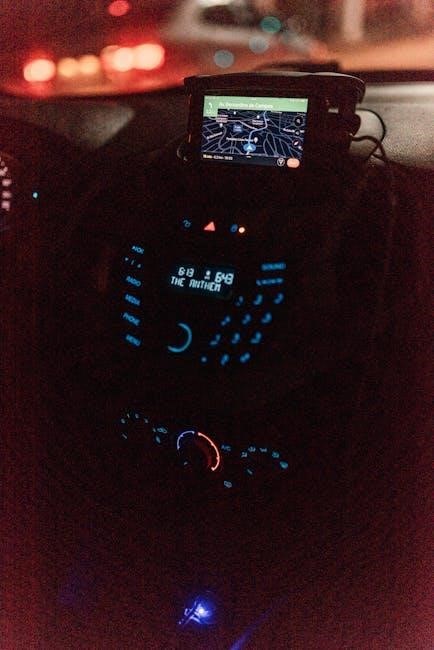
Light guides play a vital role in automotive interior lighting, particularly for dashboards and instrument panel indicators. They provide a consistent and aesthetically pleasing illumination of gauges, buttons, and displays, enhancing driver visibility and safety. Utilizing light guides reduces glare and hotspots often associated with traditional backlighting methods.
These guides efficiently transmit light from LEDs, minimizing energy consumption and heat generation within the vehicle’s interior. Their design flexibility allows for complex shapes and uniform light distribution, crucial for clearly displaying critical driving information. Furthermore, light guides contribute to a modern and sophisticated dashboard aesthetic, improving the overall in-cabin experience for drivers and passengers.
Medical Devices (Endoscopy & Illumination)
Light guides are indispensable in medical devices, notably in endoscopy and surgical illumination systems. Their ability to efficiently transmit light through narrow, flexible conduits enables doctors to visualize internal organs and tissues with clarity during minimally invasive procedures. Fiber optic light guides, a common type, deliver bright, cool light directly to the surgical site, minimizing tissue damage.
The precise control of illumination offered by these guides is critical for accurate diagnosis and treatment. They facilitate procedures like colonoscopies, laparoscopies, and arthroscopies, improving patient outcomes. Moreover, light guides contribute to enhanced image quality in endoscopic cameras, aiding in detailed observation and analysis during medical examinations.
Signage and Emergency Lighting (Exit Signs)
Light guides play a vital role in ensuring visibility and safety in signage and emergency lighting systems, particularly in exit signs. They efficiently distribute light across the sign’s surface, guaranteeing clear illumination even during power outages or low-light conditions. This consistent illumination is crucial for quick and safe evacuation in emergencies.
The use of light guides in exit signs offers several advantages, including energy efficiency and long-term reliability. They allow for a uniform glow, eliminating dark spots and maximizing visibility from various angles. Furthermore, their robust design ensures consistent performance, making them a dependable component in life-safety systems, contributing to public safety.

Design Considerations for Light Guides
Effective light guide design requires careful material selection – PMMA, polycarbonate, or glass – alongside precise geometry and compatibility with the chosen light source.
Material Selection (PMMA, Polycarbonate, Glass)
Choosing the right material is paramount in light guide design, impacting efficiency and performance. PMMA (Acrylic) is frequently used due to its excellent light transmission, ease of processing, and cost-effectiveness, making it ideal for many applications. However, it’s less heat resistant.
Polycarbonate offers superior impact resistance and higher temperature tolerance compared to PMMA, suitable for demanding environments, though it typically exhibits slightly lower light transmission. Glass provides the highest light transmission and exceptional thermal stability, but its fragility and higher manufacturing costs limit its use to specialized applications.
The selection hinges on balancing optical properties, mechanical requirements, thermal considerations, and budgetary constraints for optimal light guide functionality.
Geometry and Shape (Thickness, Width, Curvature)
The geometry of a light guide profoundly influences its light distribution characteristics. Thickness dictates light extraction efficiency; thinner guides generally offer better uniformity but can suffer from increased attenuation. Width impacts the viewing angle and overall brightness, requiring careful optimization.
Curvature is strategically employed to redirect light and achieve desired illumination patterns. Complex curves can enhance light extraction and create unique visual effects. Precise control over these parameters is crucial for achieving uniform illumination and minimizing dark spots.
Designers must carefully balance these geometric factors to meet specific application requirements, ensuring optimal performance and aesthetic appeal of the light guide.
Light Source Compatibility (LEDs, Halogen, Incandescent)
Light guides demonstrate compatibility with diverse light sources, though LEDs are increasingly favored due to their efficiency and longevity. LEDs offer a concentrated light output ideal for coupling into the guide, maximizing brightness and minimizing energy consumption.
Historically, halogen and incandescent sources were utilized, but their lower efficiency and heat generation present challenges. These sources require careful thermal management to prevent damage to the light guide material.
Optimizing the interface between the light source and the guide—considering spectral match and coupling efficiency—is vital for achieving optimal performance across all source types.

Advantages of Using Guide Lights
Light guides provide uniform illumination, energy efficiency, and exceptional design flexibility, making them ideal for numerous lighting applications in modern technology.
Uniform Light Distribution
Light guides excel at achieving remarkably even illumination across surfaces, a critical advantage in applications demanding consistent brightness. Unlike direct lighting, which can exhibit hotspots and unevenness, light guides distribute light efficiently and broadly. This is achieved through internal reflection and carefully engineered geometries, ensuring that every point along the guide receives a similar light intensity.
For backlit displays, this translates to a clearer, more visually appealing image with no dark areas. In keypads and signage, uniform illumination ensures all buttons or characters are easily visible. The ability to spread light evenly minimizes shadows and glare, enhancing readability and user experience, making light guides a superior choice for consistent visual output.
Energy Efficiency
Light guides contribute significantly to energy conservation by maximizing light utilization. Traditional illumination methods often lose light to unwanted areas, requiring higher power output to achieve desired brightness. Light guides, however, channel light precisely where it’s needed, minimizing waste and reducing overall energy consumption.
When paired with efficient light sources like LEDs, the energy savings become even more pronounced. By effectively transmitting light with minimal loss, light guides allow designers to use lower-powered light sources without compromising brightness. This is particularly valuable in battery-powered devices or applications where reducing energy costs is a priority, offering a sustainable and cost-effective illumination solution.
Design Flexibility
Light guides offer remarkable freedom in illumination design, enabling creative and innovative lighting solutions. Their ability to transmit light around corners and through complex shapes opens up possibilities beyond traditional lighting methods. Designers can integrate light into products in ways previously unimaginable, creating unique aesthetic effects and functional benefits.
The versatility of light guides extends to their form factor; they can be manufactured in various geometries – thin, curved, or customized to fit specific product designs. This adaptability makes them ideal for applications where space is limited or where a seamless, integrated lighting solution is desired, enhancing both form and function.

Challenges and Limitations
Light guides face hurdles like light loss during transmission, complex manufacturing processes, and the need for effective heat management in certain applications.
Light Loss and Attenuation
Light loss is a significant challenge when employing guide lights, stemming from several factors inherent in the light transmission process. As light travels through the guide, whether it’s a fiber optic cable, plastic optical fiber, or a solid light guide, some energy is inevitably absorbed by the material itself. This absorption converts light energy into heat, reducing the overall intensity of the emitted light.
Furthermore, scattering occurs as light encounters imperfections or variations within the guide material. These imperfections cause light to deviate from its original path, leading to a reduction in the amount of light reaching the intended output. Attenuation, the gradual decrease in light intensity over distance, is directly related to both absorption and scattering. Minimizing these effects requires careful material selection and precise manufacturing techniques to ensure optimal light transmission efficiency.
Manufacturing Complexity
Producing high-quality light guides often presents considerable manufacturing challenges. Achieving precise geometries – including consistent thickness, width, and curvature – is crucial for uniform light distribution, demanding tight tolerances and sophisticated fabrication processes. Fiber optic light guides require meticulous alignment and bonding of individual fibers, increasing production time and cost.
Solid light guides necessitate precise molding or machining, potentially involving complex tool designs and specialized equipment. Surface finish is also critical; imperfections can scatter light and reduce efficiency. Furthermore, integrating light extraction features, like microstructures or coatings, adds another layer of complexity. These factors contribute to higher manufacturing costs compared to simpler lighting solutions.
Heat Management
Light guides, while efficient, aren’t immune to heat generation, particularly when coupled with high-power light sources like LEDs. A portion of the energy from the source inevitably converts to heat within the light guide material itself, and this can impact performance and longevity. Excessive heat can cause material deformation, reduce light transmission efficiency, and even lead to premature failure.
Effective heat dissipation is therefore essential. Design considerations include selecting materials with good thermal conductivity and incorporating features that promote heat spreading. In some applications, heat sinks or thermal interface materials may be necessary to manage temperature effectively, ensuring reliable operation and maintaining optimal light output.

Future Trends in Guide Light Technology

Future advancements focus on advanced materials, smart lighting integration, and miniaturization for increased efficiency in light guide technology and diverse applications.
Advanced Materials and Coatings
The evolution of guide light technology heavily relies on innovative materials and coatings designed to enhance performance and overcome existing limitations. Current research explores novel polymers with improved optical clarity and higher light transmission efficiency, minimizing light loss during propagation. Specialized coatings are being developed to reduce surface scattering and internal reflection, further maximizing light output and uniformity.
Furthermore, materials with enhanced thermal stability are crucial for managing heat generated by light sources, preventing degradation and ensuring long-term reliability. Nanomaterials and photonic crystals are also investigated for their potential to manipulate light at the nanoscale, enabling precise control over light distribution and creating more sophisticated lighting effects. These advancements promise to unlock new possibilities for guide light applications across various industries.
Integration with Smart Lighting Systems
The convergence of guide light technology with smart lighting systems represents a significant leap forward in illumination control and functionality. Integrating guide lights with networked sensors and microcontrollers allows for dynamic adjustment of light intensity and color based on ambient conditions or user preferences. This enables energy savings and personalized lighting experiences.
Furthermore, smart systems can utilize guide lights for data transmission, creating dual-purpose components that illuminate and communicate information. Imagine responsive displays or interactive surfaces powered by light. The ability to remotely monitor and control guide light performance also enhances diagnostics and predictive maintenance. This synergy unlocks possibilities for intelligent lighting solutions in homes, offices, and beyond.
Miniaturization and Increased Efficiency
Future advancements in guide light technology are heavily focused on reducing size and maximizing light transmission efficiency. Researchers are exploring novel materials and micro-fabrication techniques to create increasingly compact light guides suitable for integration into smaller devices. This miniaturization is crucial for applications like wearable technology and micro-displays.
Simultaneously, efforts are underway to minimize light loss within the guide itself through advanced coatings and optimized geometries. Improved extraction methods and innovative designs aim to deliver brighter, more uniform illumination with less energy input. These developments promise to enhance the performance and sustainability of guide light-based systems across various industries, driving innovation and reducing environmental impact.